By the Marketing Team · Last updated: November 1, 2026
What is local store marketing (LSM)? (2026)
The term local store marketing (LSM) has been around for decades, which is why it covers everything from a high school sports sponsorship to a geo-targeted ad on a streaming app. You'll also hear it called trade area marketing. But what does it really mean? , define what counts, route that spend through as few approved channels as possible, and report it by location every month. Self-reported receipts are the weakest method; spend that runs through a central fund or a preferred vendor is the most reliable.
LSM is influencing people to buy from and become returning customers of a store nearby their location. In a franchise system, that's franchise LSM: corporate sets the brand and ground rules and each location runs its own version.That sounds simple, but for a franchise brand it raises harder questions: who pays for it, who runs it, and how do you know it worked?
If that feels familiar, you're in good company. Local marketing for franchises is one of the few line items most brands require and almost nobody can see. This guide covers why spend goes unaccounted for, the four ways franchisors track it, and how to set up a system that tells you the number before the board asks.
How it works
What does franchise LSM include?
Every franchise LSM campaign has three parts at the store level:
- A trade area: the distance guests actually travel to that location. For a restaurant, that's often a few miles, and wider for rural stores than urban ones.
- A reason to visit: an offer, time of day, an event, a grand opening, or a seasonal item, tied to that store.
- Channels that reach the trade area: once mostly flyers, sponsorships, and local radio. Today most local reach is digital: geo-targeted social and search ads, maps ads, streaming audio, and connected TV.
Who pays for it
Franchise LSM usually sits on top of the national ad fund, not inside it. The money tends to come from one or more of these:
- The franchisee's local advertising requirement. Many franchise agreements set a minimum local spend, and Item 11 of the Franchise Disclosure Document describes it.
- Regional co-ops, where locations in one market pool dollars for shared local media.
- Corporate matches or subsidies, often used to get a first campaign started.
Who runs it
Franchise LSM works best when each role is clear. Here's how the work usually splits.
Franchisor (corporate marketing)
Sets brand standards and approved creative, chooses the tools, defines a short menu of ready-made campaigns, and reports participation and results across the system. Corporate also decides how local and national campaigns avoid bidding against each other.
Single-unit franchisee
Picks the campaigns that fit their trade area, funds them, and supplies what only a local owner knows: the nearby school, the competitor that just opened, the slow Tuesday. Time is the constraint, so anything that takes more than one sitting tends to get postponed.
Multi-unit owner
Often has a manager or small team handling marketing for the group. Onboarding can happen once rather than store by store, and these owners care about comparing locations side by side.
Where it breaks
Usually at the handoff. If corporate hands over a manual and steps back, participation stalls. If corporate runs everything centrally, the local part disappears. Our guide to getting franchisees to spend on local marketing covers how to close that gap.
Examples
What are some local store marketing ideas?
- Always-on awareness: a steady, geo-targeted campaign around each store, so nearby guests see it between promotions.
- Localized LTOs (Limited-Time Offer): the national promotion with the store's address, radius, and timing.
- Grand openings: a campaign that starts before the doors open and builds through the first weeks.
- Daypart pushes (Time of Day Offers): late-night near a campus, lunch near offices, breakfast near commuter routes.
- Hiring ads: staffing is a local problem too, and the same targeting works for applicants.
- Community partnerships: schools, youth teams, and local events, ideally with a trackable offer.
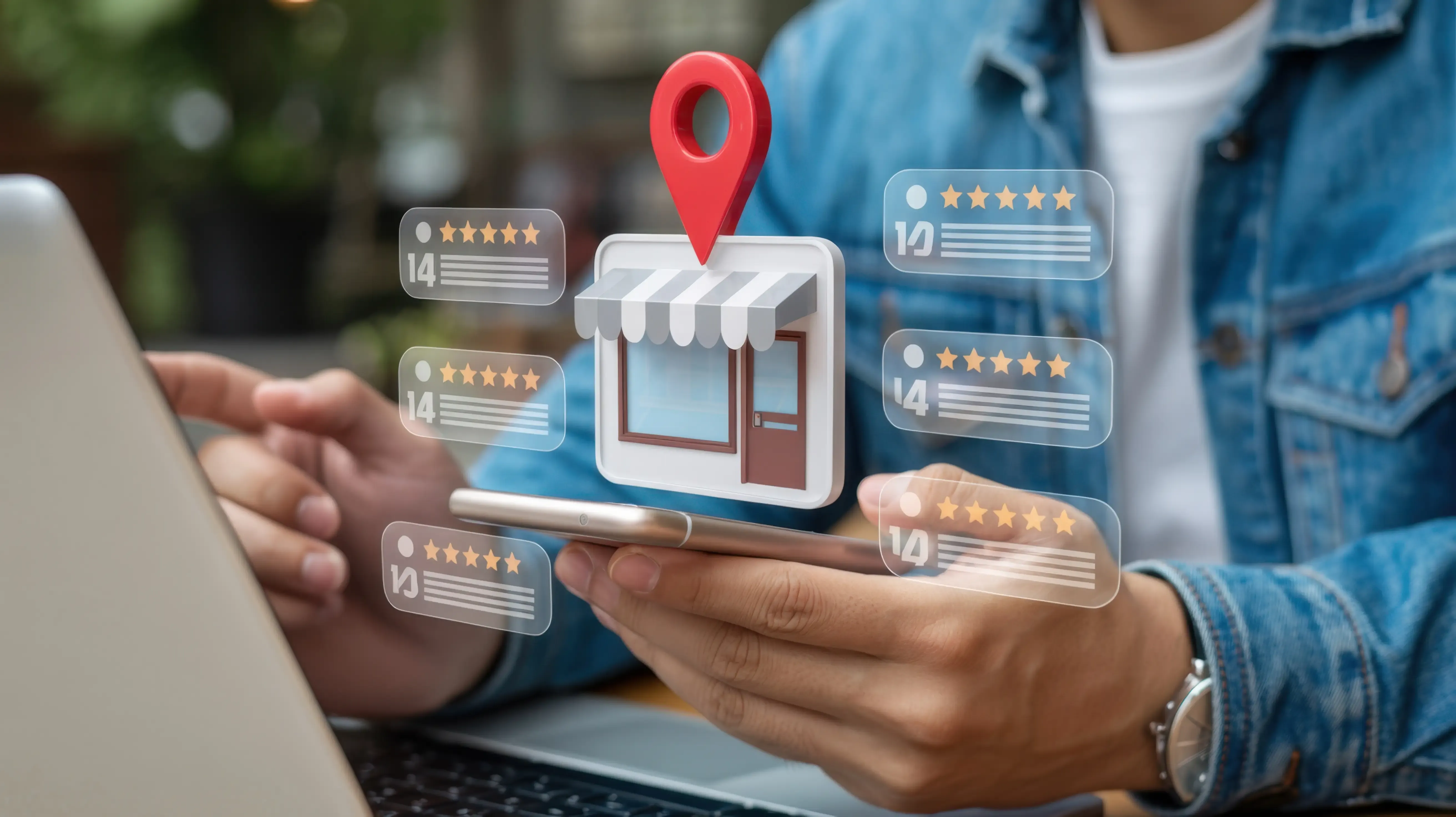
- Listings and reviews: accurate hours, current photos, and replies to reviews.
What does it look like at one store?
A single-location Culver's franchisee that opened in a new market has run Local Hero® campaigns since February 2026. The owner reports weekly sales growing from about $80,000 to more than $100,000, a 25% increase, and late-night orders up 50% (client-reported). That's franchise LSM in its plainest form: one store, one trade area, and campaigns aimed at a specific local goal.
LSM vs national
The clearest way to see what makes franchise LSM different is to put it next to national advertising.
| National advertising | Franchise LSM | |
|---|---|---|
| Goal | Brand awareness across every market | Visits to one specific location |
| Audience | The whole country or region | People inside one store's trade area |
| Usually paid by | The brand or ad fund | Franchisee local spend, co-ops, corporate matches |
| Message | One message for every market | The brand message plus a local reason to visit |
| Measured by | System-wide sales and reach | Store-level visits, sales, and redemptions |
The two work together: national builds familiarity, and franchise LSM gives a nearby guest a reason to pick this store this week. Our post on why national ads miss individual locations goes deeper on that gap.
Measuring it
What should you track?
- Participation: the share of locations that have run a campaign, and the share running one now. If most stores aren't participating, store-level results won't matter much.
- Store outcomes: guest counts, sales, and offer redemptions, compared with the same store's prior period.
- Delivery: ad views, clicks, and click-through rate. Use these to diagnose a campaign, not to prove it worked.
Report by store first, then roll up. A system-wide sales lift tells you the brand had a good month. It doesn't tell you which stores did.
Glossary
- Trade area: the geographic area most of a store's guests come from.
- Trade area marketing: another name for franchise LSM.
- Ad fund: the pooled franchisee contributions corporate uses for national or system-wide marketing.
- Co-op: a regional group of locations that pools money for shared local advertising.
- Local advertising requirement: the minimum a franchisee agrees to spend on local marketing, usually described in Item 11 of the FDD.
- Distributed marketing: a model where corporate builds approved campaigns and individual locations launch localized versions.
- Hyper-local advertising: ads targeted to a tight radius around one location.
FAQ
Is franchise LSM only for restaurants?
How is franchise LSM different from local SEO?
What tools do franchise LSM programs use?
How much should a franchisee spend on franchise LSM?
Key takeaways
- Franchise LSM is marketing aimed at one location's trade area, with a local reason to visit.
- In a franchise, corporate sets the rules and the tools, and each location runs and usually funds its own campaigns.
- Listings and reviews are part of franchise LSM, because they decide what a guest sees after the ad.
- Measure participation first, then store-level visits and sales, not system totals.
Related reading: 6 best franchise local marketing platforms (2026) · How to track franchisee local marketing spend
SOURCES
- Local results based on relevance, distance, and prominence; review count and rating affect prominence → https://support.google.com/business/answer/7091?hl=en (checked Oct 28, 2026)
- 97% of consumers read reviews for local businesses (BrightLocal, 2026) → https://www.brightlocal.com/research/consumer-review-survey/ (checked Oct 28, 2026)
- Item 11 describes minimum local advertising amounts → https://www.bizbuysell.com/learning-center/franchises/item-11-fdd/ (checked Oct 15, 2026)
- Merry Maids 0.7% of weekly gross sales on local digital (2023) → https://franchise.merrymaids.com/blog/franchise-advertising (checked Oct 15, 2026)
- Culver's single-location new-market result; 12,000+ campaigns and 1.8% median Meta CTR → Local Hero® Proof Point Library, Ready rows (read Oct 28, 2026). Client sign-off still required before publishing.